
How to prevent VAT fraud in the supply chain?
12.02.2025 14:25
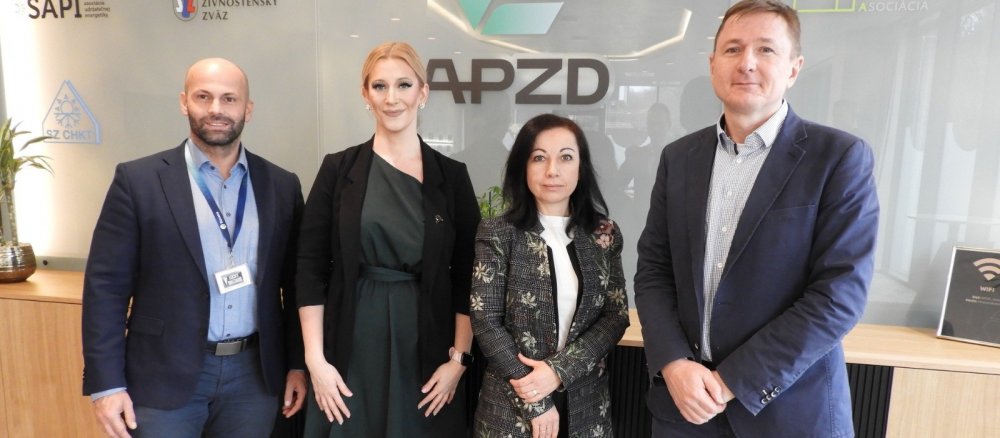
VAT fraud can affect even responsible companies that fail to recognise the risk in time. A single weak link in the supply chain is enough, and a business may unknowingly become part of a fraud with serious consequences. At the January seminar with experts from CLA Slovakia, we therefore discussed how to recognise these threats, minimise the risk and protect the company from unexpected financial impacts. Since this topic aroused great interest, in this article we will focus on the most common risks, indicators of fraud and practical measures to minimise threatening financial losses.
An inseparable part of the VAT mechanism is the right of taxable persons to deduct VAT on goods and services, whereby this right follows from the principle of fiscal neutrality, which aims to fully relieve the entrepreneur of the burden of VAT due or paid in the course of his economic activities.
Under the VAT Act, the right to deduct VAT on goods or services arises for the taxpayer on the day on which the tax liability for these goods or services arose. A statutory provision worded in this way establishes an explicit right of the taxpayer; it must be added, however, that the legislator made the exercise of this right conditional on the fulfilment of further conditions, which we can divide into substantive and formal.
Substantive conditions include proving that the person deducting VAT carries out an economic activity (is a taxable person), acquired the goods or services from another taxable person, and used these goods or services for the purposes of his taxable transactions. Holding an invoice with all the legal requisites establishes the fulfilment of the formal condition.
At present, in practice we often encounter a relatively new trend in the decision-making practice of the tax administrator and the Slovak courts, namely a departure from the tendency to primarily examine the (non-)fulfilment of the substantive conditions for the entitlement to deduct input VAT, or for the VAT exemption on the supply of goods to another member state. Instead, attention shifts towards examining the line of fraudulent conduct in the chain in a situation where the taxable entity has fulfilled the substantive conditions.
In this case, the tax administrator, in accordance with the settled case law of the European Union, assesses four questions, the so-called Axel – Kittel test, which, in the event of a finding of fraudulent conduct on VAT, must be answered affirmatively:
- Did a tax loss arise from the assessed taxable transactions?
- If so, is this tax loss the result of fraudulent conduct?
- If the tax loss is the result of fraudulent conduct, were the assessed taxable transactions of the taxpayer connected with this conduct?
- If the assessed taxable transactions were connected with the fraudulent conduct, did the taxpayer know about it, or could and should have known?
If the tax administrator denies the right to deduct VAT, or the VAT exemption, on the grounds of fraudulent conduct, it is precisely the tax administrator who bears the burden of proof. In the context of proving the knowledge element of the Axel – Kittel test, the tax administrator examines whether the taxable entity adopted the measures that can reasonably and justifiably be required of it to ensure that the received supply will not lead to its participation in tax fraud. In other words, whether the taxable entity verified the reliability of its direct supplier and whether the very conditions under which the assessed supply of goods or service is carried out do not indicate the riskiness of this supply. The tax administrator must prove objective factual circumstances suggesting that the taxable entity knew or could have known about the fraud in the supply chain. In practice we most often encounter the conclusion that the taxable entity did not know about the fraud in the supply chain, but could have known.
Prevention against the denial of the right to deduct VAT or the right to a VAT exemption on the grounds of tax fraud in the supply chain consists in adopting appropriate measures.
An exhaustive list of such measures is not found in any legal regulation. These measures may also differ depending on whether it concerns the vetting of a new business partner or the continuous vetting of a business partner during ongoing cooperation.
Vetting a business partner
A prospective business partner can be vetted primarily through publicly available registers, such as, for example, the commercial register, the trade licensing register, the register of VAT payers including the register of payers for whom grounds for cancelling VAT registration have arisen, the register of tax debtors and the register of financial statements.
A newly established company without experience, or a company that is new to the given sector while immediately carrying out transactions in large volumes, may thus be considered risky. Risk is also indicated by frequent changes of owners and statutory bodies. Furthermore, the fact that the shareholders are legal entities with their registered office in tax havens or non-cooperative jurisdictions, frequent mergers with other companies, or even the fact that a different line of business is registered than the company actually carries out.
Economic indicators may also reveal risk, e.g. if a company has been inactive for a long time and its revenues suddenly rise sharply, it owns no assets and employs no staff, yet it achieves high turnovers.
The existence of arrears towards state institutions or the existence of grounds for cancelling VAT registration also represent a considerable degree of risk on the part of a potential business partner.
The company's registered office is also important, or rather its business premises. If a personal visit is not possible, it is advisable to check whether it is a so-called virtual registered office. Increased caution is required if a business partner requests the handover of goods at an unusual location, e.g. at a petrol station or a shopping centre car park.
The vetting of business partners in publicly available registers can also be carried out automatically using computer applications and thus performed both before the start of cooperation and continuously throughout the entire period of cooperation with the business partner.
Vetting the conditions of the transaction
An entrepreneur should also pay attention to the conditions under which the transaction is to be carried out. Several circumstances may signal a risk of fraud.
An example is the price at which the product or service is offered, i.e. whether it is not disproportionately low or high compared with the market price.
The payment terms also deserve attention, for example a supplier's request for payment by transfer to two different bank accounts or to an account not reported to the tax administrator (in the Slovak Republic this is a statutory obligation).
A situation is also suspicious where the supplier of goods or service immediately suggests to whom the taxable entity can resell the goods or provide the service.
It is not possible to exhaustively list all indicators of riskiness, which may also differ depending on the sector in which the taxable entity operates. At the same time, the existence of only a single indicator of riskiness does not in itself necessarily mean that the business partner will be risky. Some indicators of riskiness become significant only in combination with other indicators.
On the other hand, if the taxable entity identifies a certain risk circumstance, it is accepted that if it carries out additional, deeper vetting of its business partner and the reliability of the business partner is confirmed, it will not be a risky transaction.
Liability for tax
The tax administrator may require the taxable entity to pay the tax that should have been remitted by the supplier who supplied it with the goods or service, even in the event that the invoice was paid to the supplier. The institute of liability for tax applies in particular in the following situations:
- The price of the supply is, without economic justification, disproportionately high or low.
- The supplier and the customer are personally connected persons.
- The price for the supply was paid to an account other than the supplier's bank account published on the financial administration's portal.
When defending against possible penalisation by virtue of liability, it is important to hold documents proving that at the time of supply or payment the statutory conditions for the emergence of liability were not met, e.g. that the price did not show signs of disproportionateness or that the supplier's bank account was published in the relevant lists of the financial administration. Merely carrying out the verification is therefore not sufficient; it is also necessary to document it and be able to prove it in the event of a tax audit.
Main recommendations for businesses
As prevention against the additional assessment of tax on the grounds of tax fraud in the supply or customer chain, it is beneficial for the taxable entity to have vetting of its business partners set up, i.e. to have internal processes and control mechanisms in place that are, where possible, captured in an internal directive, and to actually carry these out and archive the outputs from them. Given the frequent changes in tax legislation as well as the development of case law in this area, we recommend regularly training the employees responsible for implementing the adopted measures.
If you are interested in more detailed information about the options for setting up, as part of prevention, an internal mechanism for verifying the reliability of your business partners, do not hesitate to contact the team of experienced professionals in the field of tax advisory at CLA Slovakia, s. r. o.
Source: CLA Slovakia

