
Carmakers are failing to win new models, they have one last year. Even small companies now want to leave (interview)
17.04.2026 12:39
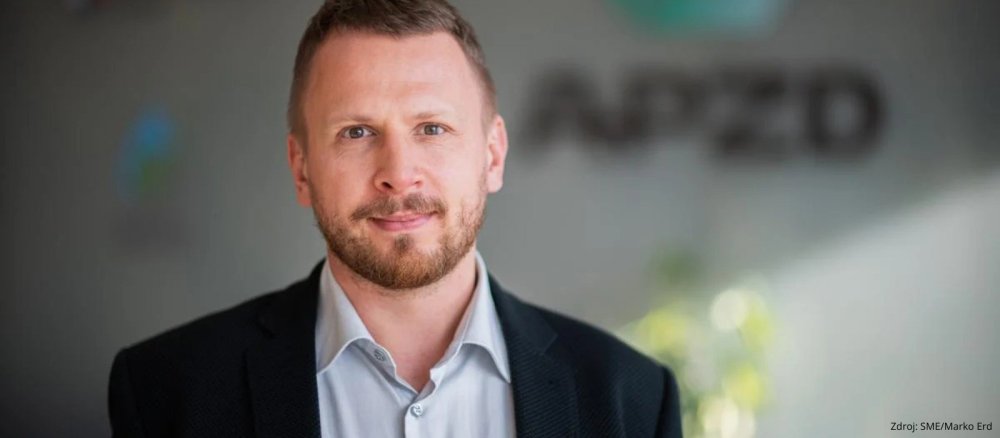
Slovakia has lost its economic significance, says Andrej Lasz.
Source: SME / INDEX
It is common practice in Slovakia for politicians to automatically place the costs of new social benefits on the shoulders of employers. „The result is that we have no chance of competing,“ believes Andrej Lasz, Secretary General of the Association of Industrial Unions and Transport.
According to him, Samsung's departure was proof that for multinational companies factories in Slovakia make no economic sense, because they are considerably more expensive not only compared to plants in Asia, but also compared to Poland, Hungary or the Czech Republic.
As he points out, almost all investments in Slovakia were made by companies from Western Europe and the USA, which first and foremost need legislative predictability and traditionally pay attention to the legal protection of their investments.
„As a result of the escalated tension between Slovakia and the EU, investors' trust is disrupted,“ explains Andrej LASZ in an interview for INDEX.
In the interview you will read:
- whether Samsung's departure was a one-off event or whether Slovakia faces an exodus of further companies,
- how smaller companies are faring in Slovakia and what they complain about,
- why new foreign investments are not coming to Slovakia,
- what needs to be done for us to become competitive.
We recently heard from someone in the corporate environment that Slovak enterprises are not buying anything and are even saving on office supplies. Maybe that is a bit exaggerated, but do you also have information that companies are saving extremely?
Slovak industry strongly feels the slowdown of the economy in Western Europe, especially in Germany. This is reflected in weaker demand, lower turnover and growing pressure on margins.
In such a situation, it is natural for companies to resort to savings and reconsider even ordinary expenditures.
A few months ago you said that foreign investors are turning their backs on Slovakia and that those who still remain here are only putting money into maintaining what is currently produced. That is, companies are losing the reason to invest and people the reason to stay. Is it really that bad?
We have reached a notional line at which we are starting to lose orders on several fronts. Among the neighbouring countries we have the highest labour cost, yet people receive lower wages due to the high tax and levy burden.
On the other hand, we are squeezed by expensive electricity. If a company wants to buy it for next January, it will pay 106 euros per megawatt-hour. Meanwhile, several European countries have launched co-financing programmes, bringing the price of electricity down to a level of around 50 euros/MWh.
We are in a state where we are not losing the battle with cheaper Asian competition or the USA, but we are already falling behind even European companies.
Carmakers are also at risk
For several years now no significant foreign investment from industry has come to Slovakia, and you have been warning the government about the deteriorating business environment. Have you received any reaction from it?
Two things are taken into account in investments. The first is the price for the manufactured product, and the second factor is the legislative and social climate and predictability.
We saw it with Samsung's departure. When the foreign parent companies decide where they will continue production, Slovak factories draw the shorter straw.
We did not ask the government to favour conditions, but it should at least try to set up conditions similar to those our foreign competitors have.
Do you feel that the government is listening to you?
It is necessary to understand that we are a small country and 99 percent of industrial production goes abroad, which is why it is important to compare ourselves with neighbouring states. As a result of the government's consolidation measures, we have become so overpriced that we have ceased to be interesting for foreign investors.
And whether the government is listening to us? The first more significant step is the effort to at least get Slovalco going, which should change the legislation in a way that would also help other energy-intensive companies.
It makes a difference whether the price of electricity makes up 30 percent of your production costs, as at Slovalco, or three percent, as in the automotive industry.
You mentioned Samsung's departure. Do you also have notice of further departures of foreign companies?
Our good fortune is that the backbone of industry is formed by the automotive sector. And that is built on the production of models tied to seven-year cycles. This means that changes do not happen immediately, because we have models already won through tenders within the carmakers.
The bad news is that our carmakers are failing to win new models. They have one last year to compete for a new model and bring it to Slovakia.
I do not mean to say that carmakers will disappear from Slovakia, but rather that they will gradually reduce production volume. However, if one work shift were to end at a carmaker, it would be several thousand people, and at subcontractors three to four times more jobs would disappear.
Is the lack of investment by foreign companies a problem only of Slovakia, or is it related to global uncertainty?
It is related to Slovakia. According to a survey by the Slovak-German Chamber of Commerce and Industry, as many as 45 percent of enterprises with German owners plan to reduce investment activity in the coming period, and almost a third want to reduce the number of workers.
A negative is that the inflow of new foreign investments has been reduced almost to zero in recent years. And in the long-term view we draw the shorter straw compared to neighbouring countries when attracting new investments.
The inflow of foreign direct investment in the last ten years amounted to only 1.5 percent of GDP, while for our neighbours it was more than three percent. Simply put, we are losing in terms of costs.
How?
For example, employees in the Czech Republic or in Hungary earn one extra net salary per year, yet at the same time their total labour cost for the company is lower than in Slovakia.
This difference grows the higher an employee's salary is, which is an important cost factor for innovative companies or development centres, in which better-paid employees work.
If a foreign investor who would like to open a factory with higher added value compares individual countries, then Slovakia makes zero economic sense for them.
And that is not even mentioning the transaction tax, which only we and the Hungarians have. People just forget to point out that Hungary has a corporate income tax of nine percent, while for large companies we have 24 percent.
If you also add the transaction tax, the total tax burden is over 27 percent. And if you compare it with the Poles, we also have no chance. The Poles have got a good grip on EU funds and have many calls announced to support entrepreneurs in renewing company equipment, automation or new technologies.
National policy has a greater impact
What does the deterrent effect of the transaction tax on new investments consist of?
The problem is not that entrepreneurs would be unable to calculate and pay it, but in the case of new investments it can be a problem, because the investor cannot calculate it in a mathematical model.
At the outset, the investor has no idea how many account movements they will have, in what amounts and how high a tax will apply to them. The more unclear elements there are in the tax system, the worse it is from the perspective of a foreign investor.
It must be realised that multinational companies have factories all over the world, and a factory in Slovakia is one of them. It competes with the other subsidiaries of the group for further orders – and these can be cars or televisions.
The transaction tax is part of the costs to which the investor must add high health levies, income tax and other costs, such as recreation or sports vouchers.
It has become a national sport that if politicians come up with something, they automatically throw it onto the shoulders of the employer. But all of these are costs that enter the equation, and the production of a single product becomes more expensive. The result is that you have no chance of competing.
Continuation of the interview at SME.sk.
SOURCE:APZD

