Lasz: There will be a multitude of lawsuits over the 8 May public holiday. The courts will decide how the law should have been interpreted
21.05.2026 09:50
The Slovak economy is slowing down, companies are talking about a loss of competitiveness, and people increasingly feel the pressure of more expensive prices, higher taxes and uncertainty at work. While the government still talks about pro-growth measures being prepared, entrepreneurs and the opposition point out that many problems are already today affecting the wallets of ordinary households.
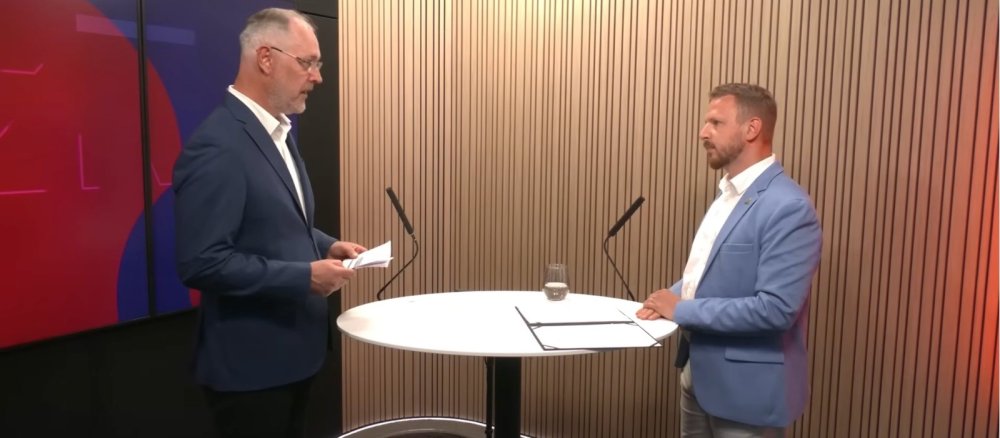
In the discussion programme of Radio Expres, Braňo Závodský Naživo, sharp words were heard about the transaction tax, expensive energy, layoffs and the departure of companies and sole traders from Slovakia. Andrej Lasz, Secretary General of the Association of Industrial Unions and Transport, claims that Slovak companies today are losing the battle for new investments and production.
„A hundred times nothing will wear down even an elephant,“ Lasz described the situation of entrepreneurs. According to him, companies are harmed not by a single measure, but by a combination of several state actions – from the transaction tax, through higher levies, to more expensive electricity or the rise in VAT.
People pay more, the state collects less
One of the most sensitive topics remains rising prices. Increased VAT, new taxes and higher levies have, according to employers, significantly affected households. Lasz pointed out that last year employees paid 21 percent more in taxes than the year before. The year before that there had already been a double-digit increase.
According to him, the expected effect on the state's revenues has not materialised. According to the figures for the first quarter, VAT collection is even lower than last year. This may mean two things – people have begun to save significantly, or part of the economy is shifting into the grey zone.
„People may be expecting worse times,“ said Lasz. If households restrict consumption, the consequences are gradually passed on to the entire economy – less shopping means weaker performance of shops, production and services.
Companies talk about the departure of production and sole traders
The concerns do not relate only to prices, but also to jobs. Employers point out that Slovakia is ceasing to be attractive for new investments. According to Lasz, multinational corporations today increasingly shift production to countries such as the Czech Republic, Poland, Hungary or Spain.
The reasons are especially lower costs and a more favourable business environment. While Slovakia has a 24-percent corporate income tax for larger companies, Hungary, according to Lasz, operates with a nine-percent rate.
Alarming figures are also coming from small entrepreneurs. Last year, according to him, approximately 66 thousand trade licences and 7,700 limited liability companies ceased to exist, which are the highest figures in recent years. Some entrepreneurs, according to him, are considering relocating their business abroad.
„I rather think that trade licences are being opened somewhere in the Czech Republic or in Poland,“ he said.
Do further layoffs threaten?
A sensitive topic is also jobs in industry. Slovakia is strongly tied to the automotive sector and, according to employers, some factories are already losing the battle for new car models.
Lasz mentioned that, in his words, both the Bratislava and Nitra carmakers had problems obtaining new production programmes. If production gradually moves elsewhere, this does not, according to him, have to mean the immediate closure of factories, but a reduction in production, changes and the number of employees may come.
And it is precisely this that the regions fear most. After all, four to five further jobs at suppliers are tied to one job at a carmaker.
The good news, according to employers, is that for now, in stronger regions, people are still able to find new work relatively quickly. It may be worse in economically weaker parts of Slovakia.
Chaos around public holidays and fears of lawsuits
The abolition of the day off during the 8 May public holiday also provoked great criticism. According to Lasz, companies did not know how to proceed correctly. Some let people work with surcharges, others sent employees home or ordered them to take leave.
The result is supposed to be disputes and possible lawsuits between employees and employers.
„If this was the intention, then the intention was to cause chaos in labour-law legislation,“ declared Lasz.
The topic is also sensitive for the employees themselves. Many were dealing with whether they would receive surcharges, whether they would have time off, or whether they would lose part of their income.
Pensions, social expenditures. Where will the state find the money?
The debate also touched on the state's large social expenditures. The moderator recalled that 13th pensions alone cost the state approximately 900 million euros a year, and energy assistance a further hundreds of millions.
Lasz pointed out that consolidation will not work without cuts. He claims, however, that the state should first manage more efficiently and recover existing debts. According to him, entrepreneurs and state organisations owe the Social Insurance Company, the health insurance companies and the financial administration together approximately 4.7 billion euros.
„This poor management of public institutions causes new taxes and levies to have to be introduced,“ he said.
The opposition: The measures are coming too late
The shadow finance minister for Progressive Slovakia, Štefan Kišš, was also critical. He claims that the government „suffocated“ the economy for three years and is now trying to fix its own mistakes.
„When you tie a runner's hands and feet and then allow them to untie one hand, they will not run far,“ said Kišš.
He considers the abolition of the transaction tax and a lower tax and levy burden on labour to be key. According to him, however, the government will not have the courage to make more fundamental changes.
The biggest problem? People are losing trust
Although politicians and entrepreneurs argue about solutions, they agree on one thing – the economy needs growth. Without new investments, production and higher consumption, Slovakia will not, according to them, get out of its problems.
The biggest problem, however, may not lie in the figures alone. Rising prices, uncertainty at work, fears of layoffs or the feeling that the state keeps adding new obligations and taxes cause many people to start being more cautious. They spend less, save more and lose trust that the situation will improve in the coming years.
Article taken from the portal SITA.sk.
Braňo Závodský Naživo
Watch the entire programme with Andrej Lasz, Secretary General of the Association of Industrial Unions and Transport:
Source: Rádio Expres | Braňo Závodský Naživo