They are not psychologists, but they help young people. To find their way in the world of work and in themselves
23.05.2025 14:00
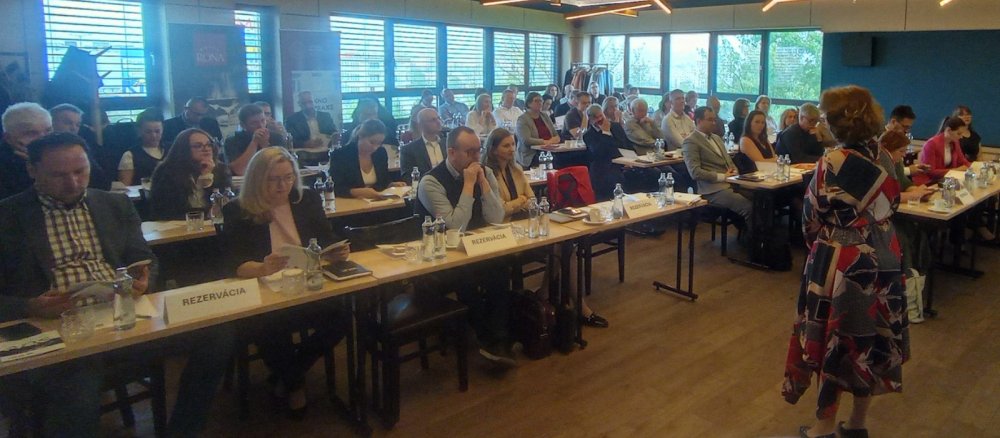
Vocational education is often mentioned in connection with the shortage of qualified workers. But the quality of education concerns not only the curriculum and equipment, but also the relationships and mental well-being of young people. Who is closest to students today, how to motivate them, what troubles them and what they need was discussed in the Panel at the conference We Learn from Each Other. The possibilities of improving vocational education and training were discussed, research mapping how instructors of practical training perceive their role was presented, and the results of the survey TOP main instructor in dual training were also announced.
At secondary schools we increasingly encounter the fact that young people need someone who will help them handle pressure, uncertainty, anxiety or conflict. But the school psychologist is often unavailable, if there is one at the school at all.
„When we talk to young people who contact our IPčko Crisis Helpline, we repeatedly hear that they do not have anyone with them they could talk to openly – not because they would refuse psychological help, but because at schools there often is none. And even if there is, the psychologist tends to be overburdened. Sometimes they are in charge of hundreds of children or several schools at once. A student who needs someone close and trusted often does not have such a person,“ says counsellor Lenka Kvašňáková from the civic association IPčko.
„What troubles young people most today is a feeling of loneliness despite the fact that they are surrounded by people. They feel enormous pressure to perform in all areas of life – from family, school, peers to partner relationships. They feel that they must not fail, disappoint, that they must constantly perform. This leads to fatigue, exhaustion, anxiety or depression. Many of them self-harm or think about ending their lives. They are often on the edge between life and death. They experience a lot of pressure and fear of not being able to be themselves. Outwardly they wear masks, appear strong and capable, but inwardly they experience pain that those around them do not see. And what is hardest – they do not feel heard,“ she adds.
It is precisely the main instructors in vocational education who are often the closest adults to whom young people can confide. „The instructor has one, two, at most three students with them every day. They have time to notice things. They see that something is not right. They ask. They react,“ explains Dominika Kravecová from the Association of Industrial Unions and Transport (APZD), which co-organised the event.
„When a student trusts the instructor, they often confide their problem to them. Yet the main instructors are not trained in mental health. Their role is professional – to teach practical skills and prepare for work,“ she adds.
Research showed how instructors perceive themselves
The fact that their role goes far beyond teaching was also confirmed by research among more than five hundred main instructors. It showed that they have long ceased to feel only like guides of practical training. Many perceive themselves as supportive persons who stand in for psychologists, replace parents and help students handle demanding situations.
„They find themselves in moments when they deal with family problems, psychological difficulties, school failures. They do this without formal preparation, out of humanity, and bear great responsibility in doing so,“ said professor Adriana Wiegerová from the Faculty of Arts of Comenius University in Bratislava, who led the research.
„If we want to help them with this, we must name these things and project them into the system of vocational education. Because what these people are already really doing has great significance,“ she added.
How to change vocational education and training?
This need was also followed up by the discussion on the prepared legislative changes. Participants addressed the amendment to the act on vocational education and training, which is to bring changes responding to the needs of schools, students and employers.
Naturally, they also touched on the fact that vocational education does not stand only on curricula, but especially on the relationship between the student and the instructor who accompanies them every day. Although the act can regulate a lot, it is precisely this relationship that remains decisive.
„Good legislation is a powerful tool. If vocational education is to be functional, we must stop asking only what we will teach the student, and start looking also at with whom and in what relationships it takes place. The role of the instructor is irreplaceable in this respect. That is why they should be systematically supported,“ emphasised Dominika Kravecová from APZD.
A unique award
One of the strongest moments of the conference was the announcement of the results of the third edition of the survey TOP main instructor in dual training. The survey is jointly organised by the professional organisations involved in the dual education system – the Association of Industrial Unions and Transport, the Association of Employers' Unions and Associations of the SR, the Slovak Mining Chamber and the Slovak Chamber of Trades.
The winner in the category of experienced instructors was Marián Surmík from Železničná spoločnosť Slovensko, second place was won by Zdenka Klimeková from Penam Slovakia and third by Tomáš Trnka from Kia Slovakia.
In the category of beginning instructors, the most votes were won by Peter Ševec from Kia Slovakia, followed by second-placed Filip Kapusta from the Dual Academy and third-placed Zuzana Člunková from Schaeffler Skalica.
The award winners work in various regions and sectors, but they are united by the most essential thing – for the students they are a natural authority whom they trust. They help them find their way in the world of work and in themselves. „What makes an instructor exceptional cannot be written into curricula. But it can be recognised. And that is precisely why it makes sense to highlight, support and publicly recognise these people,“ concluded Dominika Kravecová.
Source: APZD